

Anyone browsing sourdough recipes online might assume that a stand mixer is an essential piece of equipment. Many baking websites display polished kitchens with powerful mixers kneading dough into silky perfection. For certain types of bread, that setup makes sense.
But in my own sourdough baking, one piece of equipment you might expect to see is completely absent.
I don’t use a mixer.
Not occasionally. Not for convenience. Simply not at all.
And the reason is fairly simple: the dough does most of the work by itself.
The quiet advantage of fermentolyse
My typical process begins with fermentolyse. Flour, water, and starter are mixed together and then left alone for a while before salt is added.
Note: See also my post Autolyse vs Fermentolyse: What’s the Difference in Sourdough Baking?
This short resting period does something surprisingly powerful. The flour fully hydrates, enzymes begin breaking down starches, and gluten strands start organizing themselves without any mechanical help. By the time the dough is ready for the next step, it already has structure.
In other words, the dough begins building strength before the baker even touches it.
When you work this way, the traditional need for heavy kneading is dramatically reduced. The dough becomes extensible and cooperative almost on its own.
That alone removes much of the reason for using a mixer.
The myth of “no-knead” sourdough
The internet loves the phrase “no-knead bread.” It sounds appealing, and technically it isn’t entirely wrong.
But it is also slightly misleading.
Even doughs that claim to be “no-knead” still require some form of gluten development. The structure of bread does not appear magically. The gluten network must still form and strengthen in order to trap the gases produced during fermentation.
If you don’t knead the dough in the traditional sense, you will almost certainly be using stretching and folding techniques.
These methods include:
• Stretch and fold
• Coil folding
• Gentle dough turns during bulk fermentation
All of these actions develop gluten. They simply do it in a slower and gentler way.
So while you may not be standing at the counter kneading dough for ten minutes, the dough is still being developed. The process just happens gradually during fermentation rather than all at once during mixing.
Gentle dough development
This slower method actually suits sourdough particularly well.
Mechanical mixers develop gluten quickly, but they can also be aggressive. A stand mixer can easily overwork dough, especially dough that will ferment for many hours afterward.
Stretching and folding, on the other hand, strengthens the dough gradually. Each fold organizes the gluten network a little more while fermentation continues quietly in the background.
The result is often a dough that feels more elastic, more alive, and easier to shape.
And the baker avoids hauling a heavy mixer onto the counter.
Less equipment, more understanding
One of the appealing aspects of sourdough baking is that it doesn’t require much equipment.
Flour, water, salt, and a healthy starter are the real essentials. Everything else—proofing baskets, Dutch ovens, bench scrapers, or baking stones—can certainly help, but none of them replace an understanding of how dough behaves.
Working without a mixer encourages exactly that understanding. You feel the dough change from shaggy to smooth. You notice when it becomes stronger after a fold. You see how fermentation transforms it over time.
Those small observations teach far more than watching a mixer spin for ten minutes.
Why a mixer still has its place
This does not mean mixers are useless. They can be very helpful in certain situations.
For example:
• Mixing enriched doughs with butter or eggs
• Handling very large batches of dough
• Commercial or high-volume baking environments
But for typical sourdough loaves baked at home, a mixer is far from necessary.
In fact, once you incorporate autolyse or fermentolyse into your process, the need for mechanical mixing shrinks dramatically.
Let the dough do the work
Sourdough baking often rewards patience more than machinery.
By allowing the dough to hydrate properly and develop gradually through fermentation and gentle folding, much of the heavy work disappears. What remains is a slower, calmer process that fits naturally into the rhythm of the day.
And in that process, a stand mixer becomes surprisingly easy to live without.
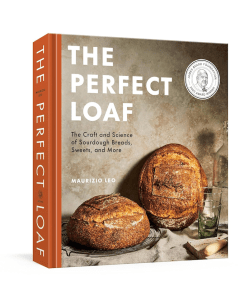 The Perfect Loaf: The Craft and Science of Sourdough Breads, Sweets, and More: A Baking Book
Maurizio Leo’s blog The Perfect Loaf has become one of the most trusted destinations on the internet for anyone learning sourdough baking. With his debut cookbook, he brings that same careful attention to detail, clear instruction, and generous teaching style into a comprehensive guide that walks readers through the essential foundations of sourdough—while also giving them the tools and confidence to go further.
The book begins with the fundamentals: understanding sourdough starters, learning how fermentation shapes flavor and texture, and mastering the techniques that turn simple ingredients into consistently excellent bread. From there, Leo guides readers step by step through a wide range of recipes designed to build both skill and intuition.
The recipes cover many of the breads home bakers love most, including:
Essential freeform loaves: Simple Sourdough, Rosemary & Olive Oil Sourdough, Extra-Sour Sourdough, Cranberry & Walnut, Demi Baguettes
Pan loaves: Everyday Sandwich Bread, Naturally Leavened Brioche, German Whole Rye, Honey Whole Wheat Sandwich Bread
Pizza and flatbread: Roman-Style Pan Pizza, Focaccia, Naan, Flour Tortillas, Pita
Buns and rolls: Soft Dinner Rolls, Potato Buns, Ciabatta Rolls, English Muffins, Bagels
Sweet bakes: Weekend Cinnamon Rolls, Italian Doughnuts, Summer Fruit Sourdough Crostata, Banana Bread, Cinnamon Babka
True to Leo’s teaching philosophy, beginners are supported throughout the entire process. Troubleshooting sections and helpful sidebars address common questions such as how to store a sourdough starter long-term, how to work with baker’s percentages, and how to recognize—and fix—common bread problems.
At the same time, experienced bakers will appreciate the deeper explorations into fermentation science, dough development, and the subtle adjustments that allow bakers to refine their technique. Topics such as hydration, ingredient ratios, freshly milled grains, and specialty flours encourage readers to experiment and gradually develop their own “baker’s intuition.”
Whether you are baking your first loaf or refining your craft, The Perfect Loaf serves as both a practical handbook and an inspiring companion in the kitchen. More information…
