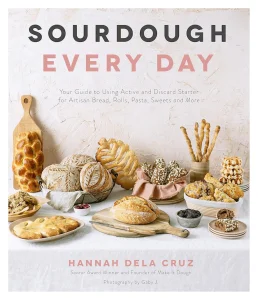
 There’s a moment in every sourdough baker’s journey when the classic country loaf stops being enough. Not because it isn’t good—but because you start to realize what that jar of starter is actually capable of. That’s where a collection like 55 Creative Recipes for Your Daily Dose of Sourdough steps in and quietly changes the game.
This isn’t just another list of bread formulas. It’s an expansion of what sourdough can be in a real kitchen, on a real schedule, with real curiosity behind it.
Hannah Dela Cruz approaches sourdough from the perspective that matters most: she taught herself. That alone already sets the tone. There’s no rigid doctrine, no overcomplicated rituals—just a practical, approachable way of baking that invites experimentation instead of punishing it.
She walks through the essentials—creating a starter, maintaining it, baking your first loaf—but she doesn’t stop there. That’s where most sourdough guides plateau. This one keeps going.
And that’s the interesting part.
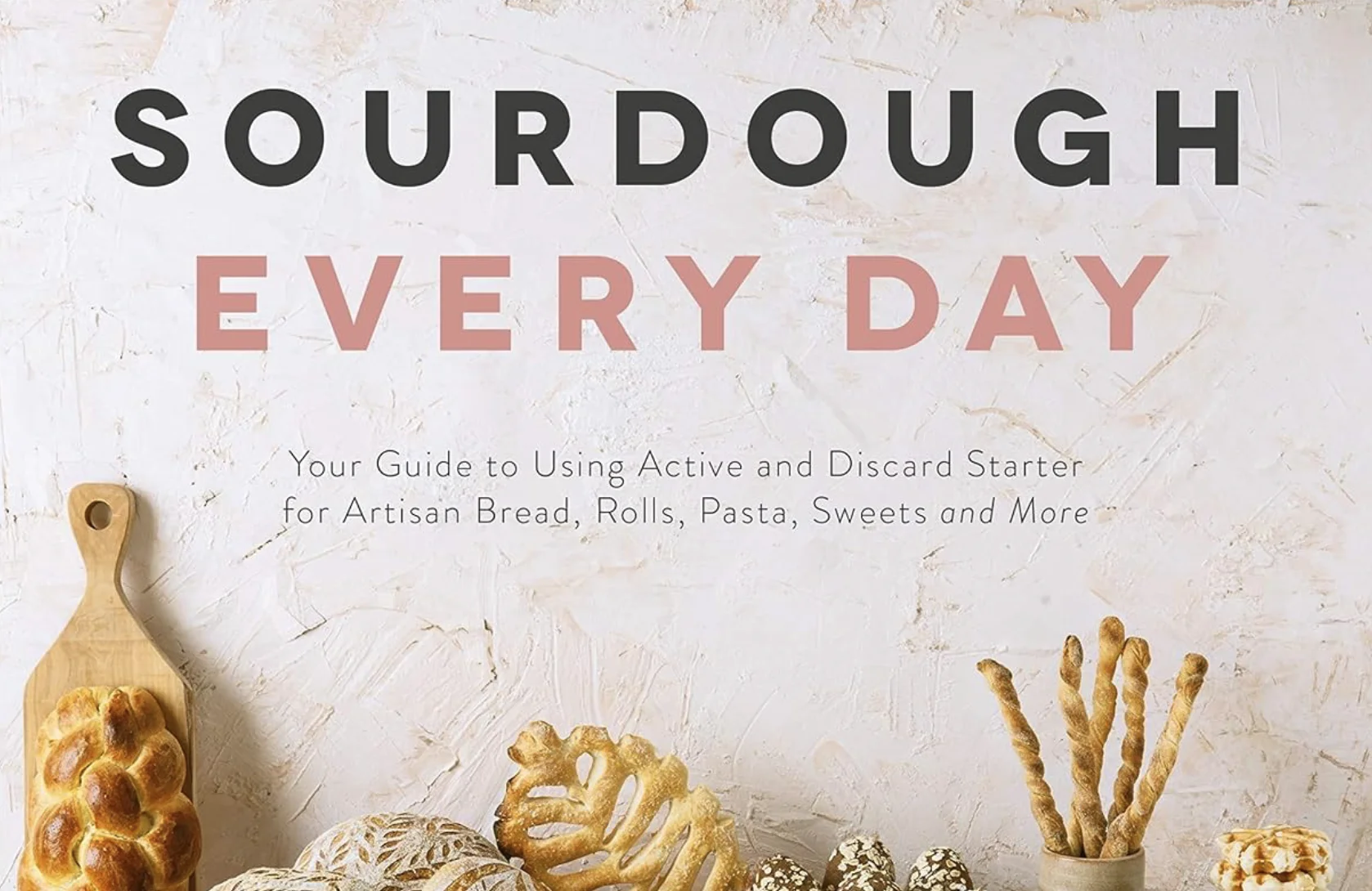
Instead of circling endlessly around the “perfect loaf,” the focus shifts to variety. Your active starter becomes a tool for far more than rustic boules. You’re suddenly working with whole wheat country loaves, yes—but also things like a Mexican hot chocolate rye loaf or a semolina chili-cheddar bread that clearly refuses to stay within traditional boundaries.
There’s a subtle message in that: sourdough is not fragile. It’s adaptable.
The same applies to enriched breads. Honey butter rolls, soft sandwich loaves, and filled breads like sweet potato–cardamom buns or cherry-chocolate babka show that sourdough can move comfortably into territory often dominated by commercial yeast. The result isn’t just flavor—it’s depth. A slight tang where you don’t expect it, structure where you usually get softness alone.
And then there’s the part most people either ignore or complain about: discard.
For many bakers, discard is a nuisance. Something to manage, reduce, or—quietly—throw away.
Here, it becomes an opportunity.
Instead of waste, discard turns into breakfast, snacks, pasta dough, dumplings, cakes, cookies, even desserts that carry that subtle sourdough character. Not overpowering, not gimmicky—just enough to make familiar things slightly more interesting.
That shift alone changes how you think about maintaining a starter. Feeding it no longer feels like upkeep. It becomes part of a broader cycle where nothing is really wasted.
What makes this collection work is not just the number of recipes. It’s the range and the mindset behind them. It doesn’t assume that sourdough belongs on a pedestal. It puts it back where it should be—on the counter, used daily, adapted freely.
For beginners, it removes the intimidation. You don’t need perfection to get started.
For experienced bakers, it removes the ceiling. You don’t need to keep repeating the same loaf to justify keeping a starter alive.
In the end, this is less about 55 recipes and more about a shift in perspective. Sourdough stops being a single product and becomes a foundation—one that stretches from bread to breakfast to dessert without asking for permission.
And once you see it that way, baking “every day of the week” stops sounding ambitious.
It just sounds practical. More information…
