 There are sourdough books… and then there are books that quietly take over your kitchen, your routine, and eventually your confidence as a baker.
Maurizio Leo’s work belongs firmly in the second category.
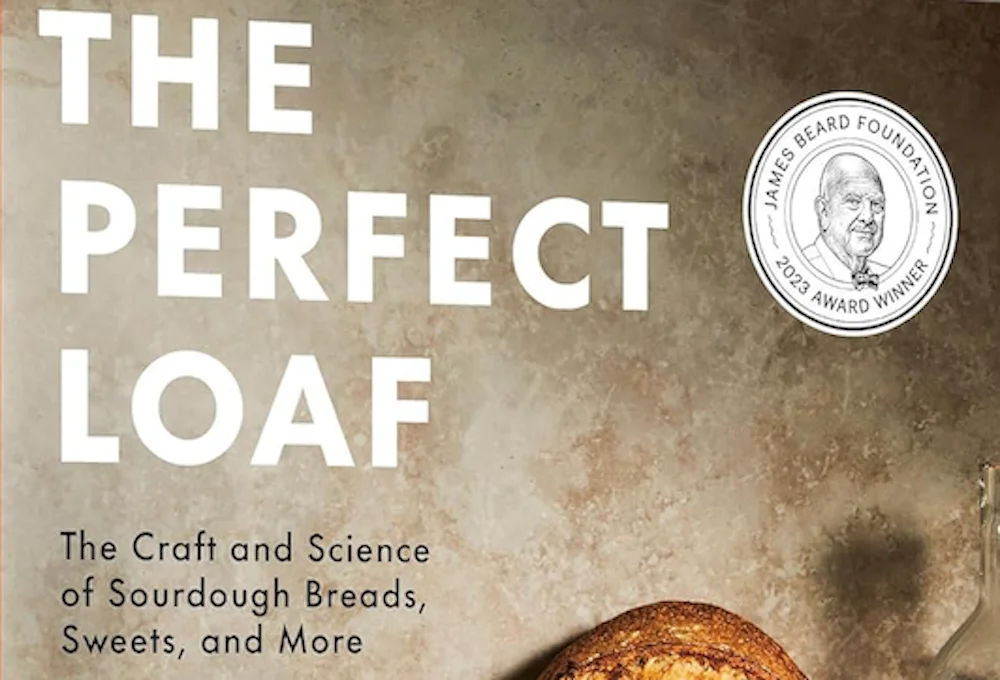
Originally known for his widely respected blog The Perfect Loaf, Leo has built a reputation not on flashy promises or Instagram-perfect loaves, but on something far more valuable: clarity, consistency, and a deep respect for the craft. His cookbook brings that same philosophy into print—structured, thorough, and refreshingly grounded.
At its core, this is not just a collection of recipes. It is a system. A framework. A way of thinking about sourdough that replaces guesswork with understanding.
What sets this book apart is its tone. It doesn’t talk down to beginners, and it doesn’t try to impress experienced bakers with unnecessary complexity. Instead, it walks a careful line—holding your hand when needed, then gradually stepping back as your confidence grows. That alone makes it stand out in a space crowded with either oversimplified guides or overly technical manuals.
The range of recipes reflects that same philosophy. You’re not limited to the classic country loaf—though that foundation is covered in detail. From there, the book expands into practical, real-world baking:
- Freeform loaves like simple sourdough, rosemary and olive oil, or a properly tangy extra-sour variation
- Pan breads including sandwich loaves, brioche, and whole grain options that actually fit into everyday life
- Pizza and flatbreads—from Roman-style pan pizza to naan and tortillas
- Buns and rolls that move beyond novelty into reliability: bagels, English muffins, ciabatta rolls
- And a surprisingly strong section on sweets, where sourdough becomes an ingredient rather than a constraint
This breadth matters. It reinforces a key idea that many bakers eventually discover on their own: sourdough is not a niche—it’s a foundation.
Where the book truly earns its place, however, is in the teaching.
Troubleshooting is not an afterthought here. It is embedded throughout. Questions that typically send people down internet rabbit holes—starter storage, hydration confusion, baker’s percentages—are addressed clearly and without drama. Even better, the book acknowledges failure as part of the process, offering visual and practical guidance on what went wrong and how to fix it.
For more experienced bakers, the value shifts. The fundamentals may already be familiar, but the deeper sections—hydration adjustments, flour selection, fermentation control—open the door to something more important than any single recipe: intuition.
That’s ultimately what this book is about.
Not chasing perfection. Not obsessing over crumb structure or scoring angles. But building the kind of understanding that allows you to adapt, adjust, and bake consistently good bread in a real kitchen, on a real schedule.
Peter Reinhart’s endorsement—calling it “the ideal gift” for bread enthusiasts—feels accurate, but also slightly understated. This isn’t just a good gift. It’s a long-term companion.
If you’re new to sourdough, it will remove much of the intimidation.
If you’ve been baking for years, it will quietly refine how you think about the process.
And if you fall somewhere in between—which is where most of us live—it may be exactly the kind of book that turns occasional success into something repeatable.
Reliable. Understandable. And, eventually, your own. More information…
