

Sourdough baking has a remarkable ability to turn simple ideas into complicated debates. Few examples illustrate this better than the discussion around autolyse and fermentolyse. Somewhere along the way, what began as a practical mixing technique turned into a small philosophical dispute within the baking world.
Yet the actual concept is surprisingly simple.
Both methods involve letting flour and water rest before the dough is fully mixed. The goal is to allow natural processes inside the flour to begin working before the baker starts kneading, folding, or shaping. That short pause can make dough easier to handle and improve the final loaf.
The confusion begins with what exactly is included during that rest.
Autolyse: letting flour and water wake up
The word autolyse comes from French baking science. It was popularized by the French professor Raymond Calvel, who developed the method to improve dough handling and bread quality.
In its traditional form, autolyse is very minimal. Only flour and water are mixed together. Nothing else.
The mixture is then left alone for a period of time, usually somewhere between 20 minutes and one hour.
During this quiet rest, several useful things happen inside the bowl.
The flour begins absorbing water completely. Dry particles hydrate and swell, forming the early structure of the dough. Enzymes already present in the flour begin breaking down starches into simpler sugars that yeast will later feed on. Meanwhile, gluten proteins begin linking together naturally, building elasticity without any mechanical work.
The practical result is noticeable almost immediately.
Dough that might have felt stiff or shaggy becomes smoother and more extensible. When mixing resumes and salt and starter are added, the dough typically requires less kneading and develops strength more easily.
Bakers who use autolyse often notice several benefits:
• Easier dough handling
• Better gluten development with less mixing
• Improved dough extensibility
• Slightly improved flavor development
The key point is that no fermentation occurs during a traditional autolyse. There is no yeast or sourdough starter present yet. The dough is simply hydrating and organizing itself.
Fermentolyse: autolyse meets fermentation
Fermentolyse is a newer and somewhat less formal term. It describes a variation where the sourdough starter is added during the resting phase instead of afterward.
In this version, flour, water, and starter are mixed together and then allowed to rest before the salt is added.
Because the starter contains active yeast and bacteria, fermentation begins immediately. The dough is therefore both hydrating and fermenting at the same time.
This approach can speed up the process slightly and can also integrate the starter more evenly throughout the dough.
Some bakers prefer fermentolyse because it simplifies the workflow. Instead of multiple mixing stages, most ingredients are incorporated at once, with only salt added later.
However, fermentolyse changes the chemistry of the resting period.
Once fermentation begins, acids produced by the sourdough culture start affecting gluten development. In moderate amounts this is helpful, but over longer periods it can weaken dough structure.
That is why fermentolyse is usually kept shorter than traditional autolyse.
The core difference
Despite all the online arguments, the difference between these two methods can be summarized in one line.
Autolyse contains only flour and water.
Fermentolyse includes the sourdough starter.
Everything else—the rest time, the dough development, the practical effects—follows from that single difference.
In practice, both methods can produce excellent bread. Many experienced bakers quietly drift between the two depending on their schedule or mood.
When to use each method
Autolyse works particularly well when:
• You want maximum gluten development with minimal mixing
• You are working with strong or high-protein flour
• You want the dough to become very extensible before fermentation begins
Fermentolyse may be convenient when:
• You want to shorten the overall mixing process
• Your starter is already active and ready to go
• You prefer a simpler workflow with fewer stages
Neither technique is mandatory. Plenty of excellent bread is baked every day without either one.
A small dose of realism
The internet has a habit of turning every sourdough technique into a sacred ritual. Autolyse sometimes gets treated this way, as if forgetting it will doom the loaf to mediocrity.
That is not the case.
Autolyse is simply a clever way to let flour do part of the work for you. Fermentolyse is a practical shortcut that combines hydration with early fermentation.
Both methods help the dough organize itself before the baker starts intervening.
And that may be the quiet lesson behind them: sometimes the best thing a baker can do is step back, leave the bowl alone for a while, and let the flour and water figure things out on their own.
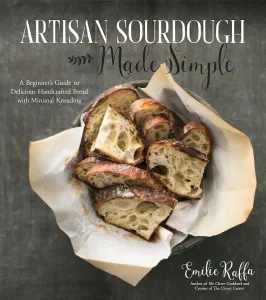 Artisan Sourdough Made Simple: A Beginner’s Guide to Delicious Handcrafted Bread with Minimal Kneading
For many newcomers, sourdough starters seem almost mysterious—spoken of as if they possess a life of their own. That reputation alone can make sourdough baking feel intimidating. In Artisan Sourdough Made Simple, Emilie Raffa removes the mystique and shows that baking with sourdough is not only approachable but also practical, even for busy households.
New bakers inevitably run into a flood of questions: How do you start a culture? How do you keep it alive? Why does dough sometimes behave perfectly and sometimes refuse to cooperate? Drawing on her experience as a professionally trained chef and passionate home baker, Raffa guides readers through both the science and the craft of sourdough in a clear and reassuring way.
The book includes step-by-step master recipes that teach the fundamentals of creating and maintaining a starter, along with more than sixty recipes that build confidence and expand a baker’s repertoire. More information…
