

Cold proofing is one of those steps that feels optional—until you skip it and realize what you’ve been missing. It’s not just about convenience or timing. It fundamentally changes how your dough behaves, how your bread tastes, and even how it looks coming out of the oven.
Let’s start with a small but important correction to how many people think about fermentation.
Bulk fermentation does not “end” when you put the dough in the fridge. It ends when the bread goes into the oven. The refrigerator doesn’t stop fermentation—it slows it down dramatically. Yeast activity drops, bacterial activity shifts, and everything continues at a controlled, almost deliberate pace.
That slow continuation is exactly why cold proofing matters.
When you place your shaped dough in the fridge overnight, you are essentially stretching time. Instead of a fast, somewhat chaotic fermentation at room temperature, you get a long, steady development phase. The yeast keeps producing gas, just slowly. The bacteria continue breaking down sugars and proteins, again more slowly. And that changes everything.
One of the most noticeable effects is flavor.
Cold proofing allows organic acids to build up more gradually. This is where that deeper, more complex sourdough flavor comes from—not just “more sour,” but more layered. You’ll notice subtle notes that simply don’t develop during a short, warm proof. It’s the difference between a loaf that tastes good and one that makes you pause after the first bite.
Then there is dough structure.
During a long, cold proof, the gluten network continues to strengthen and relax at the same time. That sounds contradictory, but it isn’t. The dough becomes more extensible—easier to stretch without tearing—while still maintaining enough strength to hold its shape. This is one of the reasons why cold-proofed dough often produces a more open, irregular crumb.
Handling also becomes easier.
A cold dough is firm. It holds its shape when you turn it out of the banneton. Scoring becomes cleaner and more precise. If you’ve ever struggled with a sticky, overly soft dough at room temperature, the difference is immediate and obvious. The blade goes where you want it to go, not where the dough decides to collapse.
That leads directly to oven performance.
Because the dough is cold and slightly tighter, it often produces better oven spring. The outer layer sets a bit later while the inside expands, giving you more lift. Combined with proper steam, this is where you start seeing those clean openings and controlled expansion—not just for aesthetics, but for structure.
There is also a timing advantage that shouldn’t be underestimated.
Cold proofing allows you to separate your baking schedule from your fermentation schedule. You can finish shaping in the evening and bake in the morning without rushing or guessing. That alone makes the process more consistent, especially when kitchen temperatures fluctuate.
But there is a trade-off, and it’s worth mentioning.
Because fermentation continues in the fridge, over-proofing is still possible. It just takes longer. If you leave the dough too long—say well beyond 24 hours—you may start losing structure. The dough can weaken, become overly acidic, and collapse more easily during baking. So while cold proofing is forgiving, it’s not infinite.
In practical terms, most bakers find that a cold proof of 12 to 16 hours hits a sweet spot. Long enough to develop flavor and structure, short enough to avoid breakdown.
So what is the real purpose of cold proofing?
It’s control.
Control over time, control over flavor, control over structure, and ultimately control over the final loaf. You’re not just letting the dough sit—you’re guiding it through a slower, more deliberate phase of fermentation that brings out qualities you simply cannot achieve in a warm, rushed proof.
And once you get used to that control, it’s hard to go back.
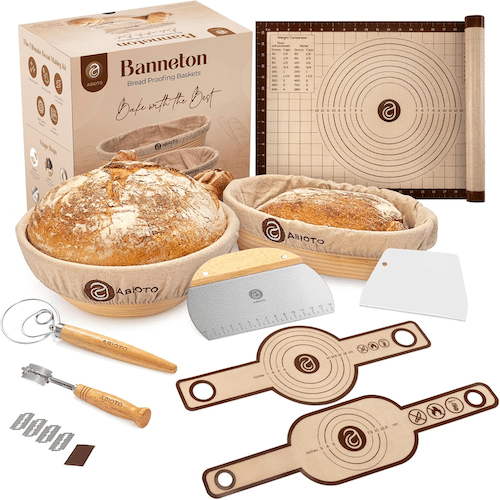 Banneton Bread Proofing Basket Set with Sourdough Bread Baking Supplies
Complete Sourdough Kit: This all-in-one bread baking kit includes everything you need to start baking like an artisan. Just unbox, prepare your dough, and bake—it really is that simple.
Craftsmanship Meets Quality: Forget flimsy tools. Our proofing basket is expertly woven from premium Indonesian rattan, built for durability and consistent results, loaf after loaf.
Level Up Your Baking: These aren’t just tools—they’re part of your process. Designed to support your technique, they help you improve your results, refine your workflow, and bake with confidence.
Family Baking Experience: Bring people together with the aroma and satisfaction of homemade sourdough. This kit turns baking into a shared experience that’s as rewarding as it is delicious.
Bake with Confidence: Clear, easy-to-follow instructions guide you every step of the way. And if anything isn’t right, we offer a straightforward replacement or refund—because reliable tools should come with reliable support. More information…
