

Throughout much of medieval Northern Europe, rye was far more than just another grain. It was the crop that stood between survival and starvation.
In modern baking circles, rye often gets treated as a specialty flour—a dark, flavorful addition to artisan loaves or a nostalgic nod to European tradition. But for centuries, rye was not chosen for taste or trend. It was chosen because it grew where wheat failed, because it survived brutal winters, and because entire societies depended on it to stay alive.
Here is a detailed blog post for your sourdough/history category in an entertaining but informative tone:
Rye: The Grain That Fed Medieval Northern Europe
Long before Instagram bakers debated hydration percentages and crumb structure, medieval peasants across Northern Europe had a much simpler question:
Would there be enough bread to survive the winter?
For millions of people living in the colder and harsher regions of Europe, the answer often depended on one humble crop: rye.
The grain that kept people alive
Today, rye is associated with hearty German breads, Scandinavian crispbreads, and the occasional deli sandwich. But in the medieval world—particularly in regions such as Germany, Poland, Russia, the Baltics, and Scandinavia—rye was not a culinary preference.
It was a necessity.
Unlike wheat, rye thrived in poor soils, cold climates, and short growing seasons. It tolerated the rocky ground, acidic soils, and harsh winters that made large parts of Northern and Eastern Europe unsuitable for more delicate grains.
Where wheat demanded ideal conditions, rye simply got on with the job.
For medieval farmers who lived perpetually on the brink of famine, reliability mattered far more than flavor.
Why wheat wasn’t always an option
Modern consumers often assume wheat was the “normal” bread grain throughout history. In reality, wheat was a luxury in much of medieval Europe.
Wheat grew best in warmer climates and richer soils—conditions more common in southern Europe and select fertile river valleys. In the colder north, wheat yields were often poor, unpredictable, or economically impractical.
A failed wheat harvest could devastate a village.
Rye, meanwhile, offered consistency. It produced dependable harvests even in miserable weather and marginal farmland.
When your family’s survival depended on your field producing something—anything—rye was the obvious choice.
Bread was not a side dish—it was life
Modern diets treat bread as accompaniment.
In the medieval world, bread was often the meal itself.
For peasants and laborers, bread could provide the majority of daily calories. A farm worker might consume two to three pounds of bread per day, sometimes more during harvest season. Bread was breakfast, lunch, dinner, and portable field ration.
And in Northern Europe, much of that bread was rye.
This was not the lofty, open-crumb artisan loaf of modern sourdough fame. Medieval rye bread was often dense, dark, and heavy—designed for nourishment and shelf life rather than aesthetics.
It had one job:
Keep people alive until next harvest.
Why rye and sourdough became inseparable
Rye flour behaves very differently from wheat.
It contains less gluten-forming protein and far more pentosans and starch-degrading enzymes, making conventional yeast-leavened rye breads difficult to produce with structure. Without acidity, rye dough often turns gummy and collapses during baking.
Medieval bakers did not understand the chemistry.
They simply knew from experience that rye bread worked better when made with fermented dough.
In other words: sourdough was not a trendy technique. It was practical necessity.
Through trial and error over generations, bakers learned that fermented rye dough produced better-rising, more stable loaves with improved flavor and longer shelf life.
Science would later explain why:
The acidity of sourdough inhibits amylase activity, allowing rye starches to gelatinize properly and set during baking.
But medieval bakers did not need laboratory analysis.
They needed bread that didn’t turn into paste.
Rye bread lasted longer—and that mattered
Another reason rye became indispensable was shelf life.
Dense rye breads stayed edible far longer than lighter wheat loaves. In societies where baking might occur only once per week—or even less often in poorer households—that durability was critical.
Some coarse rye loaves remained edible for many days, even weeks when stored properly.
That made rye ideal for:
- Rural households with infrequent baking
- Travelers and soldiers
- Harsh winters when fresh food was scarce
- Communities with limited fuel for constant oven use
A medieval family did not care whether their loaf had a beautiful ear.
They cared whether it would still feed them next Tuesday.
Rye shaped the culture of Northern Europe
Because rye became so essential, it deeply influenced the food culture of entire regions.
Germany developed countless rye and mixed-grain breads.
Scandinavia built traditions around rye crispbreads and dense fermented loaves.
Eastern Europe centered much of its peasant diet around rye breads, porridges, and later rye spirits.
Even today, the dominance of rye in many northern European bread traditions reflects agricultural realities established centuries ago.
Modern bakers often think of bread preferences as cultural taste.
Historically, they were often geographic necessity.
The decline of rye’s dominance
Rye’s central role began to diminish with agricultural improvements, industrial milling, improved transportation, and modern wheat breeding.
As wheat became more affordable and available—even in regions where it had historically struggled—many populations shifted toward lighter white breads.
Why?
Because for centuries, white wheat bread had been associated with wealth.
If rye was the bread of survival, wheat was the bread of prosperity.
As industrialization improved food security, people increasingly chose wheat not because it was better suited to their environment—but because they no longer had to choose based on survival.
The irony of modern rye
Today, rye is often marketed as premium, artisanal, or health-conscious.
Yet historically, rye was the grain of necessity—the bread of peasants, farmers, and laborers who had little alternative.
What modern bakers celebrate as rustic authenticity was once simply the taste of survival.
Every dense slice of traditional rye bread carries that history.
It is not merely a regional preference.
It is the legacy of generations who planted rye because their lives depended on it.
Final thoughts
Rye was not just another medieval grain.
It was the agricultural backbone of Northern Europe.
It fed peasants through brutal winters, sustained laborers through long harvests, and allowed entire societies to thrive in climates where wheat could not reliably grow. Without rye, the history of Northern Europe would likely look very different.
So the next time you slice into a dark rye sourdough, remember:
You are eating the bread that once kept nations alive.
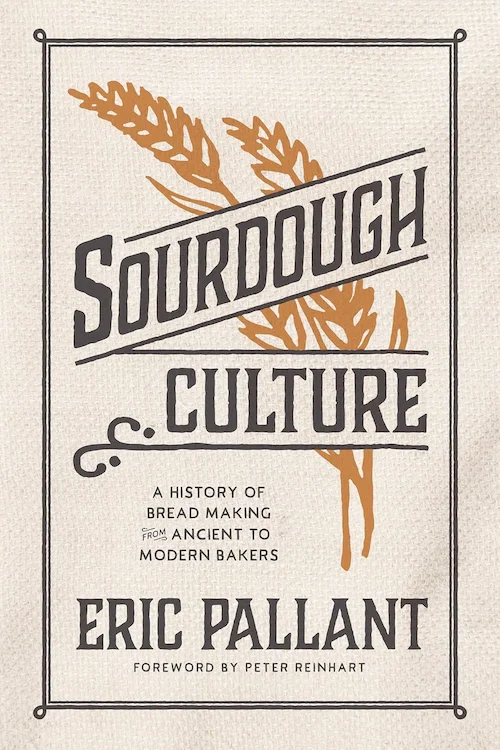 Sourdough Culture: A History of Bread Making from Ancient to Modern Bakers
The essential story of bread baking—and how sourdough became a global phenomenon.
Sourdough bread fueled the labor that built the Egyptian pyramids. The Roman Empire distributed free loaves to maintain social stability. More recently, during the COVID-19 pandemic, sourdough baking surged worldwide as people, confined to their homes, searched for comfort, purpose, and a sense of control amid uncertainty. In Sourdough Culture, environmental science professor Eric Pallant reveals that, across centuries, sourdough has never been just about bread—it has always been about survival.
Sourdough Culture traces the history and basic science of sourdough baking from its discovery more than six thousand years ago to its gradual displacement by industrial dough mixers and commercial yeast. Pallant follows its journey across continents, from the Fertile Crescent through Europe and eventually around the world. Along the way, he connects sourdough to some of history’s most recognizable figures—Plato, Pliny the Elder, Louis Pasteur, Marie Antoinette, Martin Luther, and Antonie van Leeuwenhoek—while also honoring the countless unnamed bakers who depended on it: Roman professionals, medieval households, Gold Rush miners, and generations of ordinary people who baked bread daily without recognition.
Each chapter is paired with recipes drawn from Pallant’s own collection, spanning cultures and centuries. These recipes reflect the diversity of sourdough traditions while offering practical insight into the craft itself. The result is a book that is both informative and engaging—particularly for bakers of all levels—but, more importantly, one that tells the enduring story of the bread that has quietly sustained the world. More information…
