
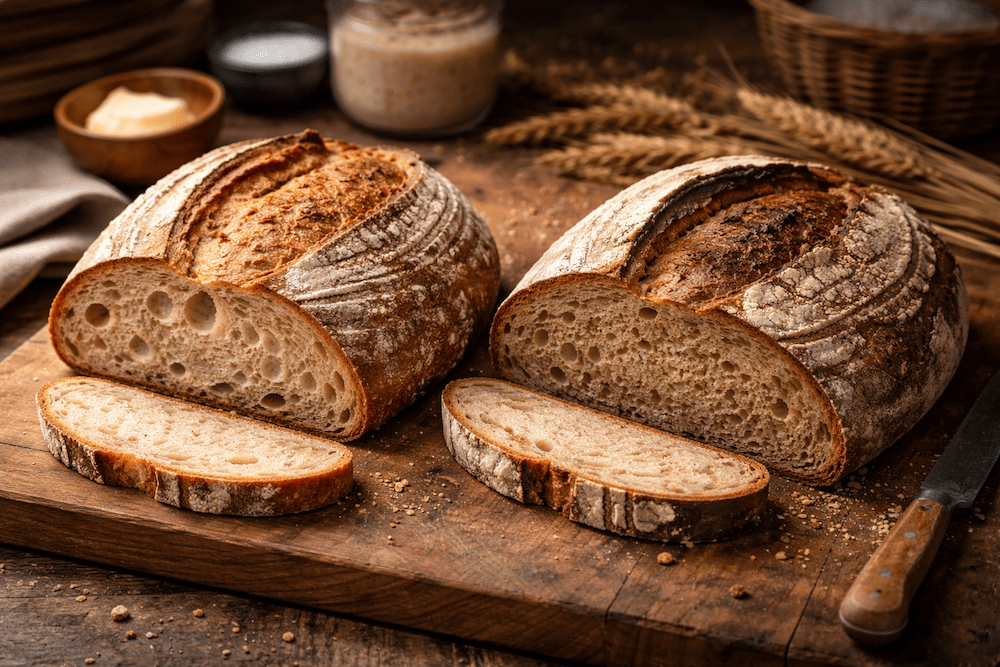
One of the most persistent myths in the sourdough world is the idea that a “real” sourdough loaf should somehow remain fresh and glorious for a week.
Let me save you some anxiety right away:
If your homemade sourdough starts losing its magic after three or four days, nothing is wrong.
In fact, that is exactly what should happen.
Many bakers—especially beginners—hear that sourdough “lasts much longer than regular bread” and expect their loaf to sit proudly on the counter for seven days while remaining as moist and chewy as the moment it came out of the oven. Then reality strikes. By day four, the crumb has firmed up, the crust has softened, and disappointment sets in.
But the problem is not your bread. The problem is the myth.
Sourdough Slows Spoilage—Not Time Itself
Sourdough’s natural acidity does help preserve bread. The acids produced during fermentation inhibit mold growth and slow microbial spoilage.
That means sourdough generally resists mold longer than commercially yeasted bread.
What sourdough does not do is prevent bread from going stale.
Those are two entirely different things.
Staling occurs because the starches in the bread begin to recrystallize after baking, a process called retrogradation. In plain English: the crumb gradually firms up and loses that fresh-baked softness.
Even the most heroic sourdough starter cannot defeat physics.
White Flour Sourdough Stales Faster Than Rustic Farmhouse Loaves
Many bakers imagine that historical sourdough loaves lasted for a week or more—and some did.
But those breads were often very different from the modern Instagram-worthy white artisan boule.
Traditional European sourdoughs frequently contained:
- Rye flour
- Whole wheat flour
- Stone-milled flour with higher mineral content
- Coarser bran particles
These ingredients retain moisture better and slow staling.
By contrast, a loaf made from 100% refined bread flour—whether from King Arthur or another quality mill—simply will not stay soft as long.
That is not a flaw.
That is flour chemistry.
Modern Artisan Bread Is Designed for Beauty, Not Shelf Life
Let’s be honest: many modern sourdough recipes prioritize:
- Open crumb
- Thin crackly crust
- Dramatic oven spring
- Instagram-worthy ears
All of those features tend to reduce shelf life.
A highly open crumb exposes more surface area to air. Thin crusts lose moisture faster. Lean doughs without fat or enrichment stale more quickly.
In other words, the prettier the artisan loaf, the shorter its prime.
Nature has a sense of humor.
Commercial Bread Has Spoiled Our Expectations
Part of the confusion comes from comparing homemade sourdough to supermarket sandwich bread.
Store-bought bread often contains:
- Preservatives
- Dough conditioners
- Emulsifiers
- Oils and fats
- Added sugars
Those ingredients are specifically designed to extend softness and shelf life.
Your homemade sourdough contains flour, water, salt, and starter.
That’s it.
It is bread in its most honest form.
And honest bread ages honestly.
How to Make Your Sourdough Last Longer
If you want to extend freshness by a day or two, you can:
Add Whole Grain Flour
Even 10–20% whole wheat or rye can noticeably improve moisture retention.
Increase Hydration Slightly
A wetter dough generally stays softer longer.
Store It Properly
Best methods include:
- Cut side down on a wooden board
- Wrapped loosely in linen or cotton
- In a paper bag inside a bread box
Avoid sealing fresh bread in plastic unless you want a soft, chewy crust.
Freeze What You Won’t Eat
Many experienced bakers slice and freeze half the loaf on day one.
That may sound unromantic, but it works brilliantly.
Final Thoughts
If your sourdough remains excellent for three to four days, congratulations:
You are baking real bread.
Not factory bread.
Not preservative bread.
Not “soft for two weeks” laboratory bread.
Real bread has a lifespan.
Real bread changes over time.
Real bread demands to be eaten, toasted, or turned into spectacular grilled cheese when it is no longer at its peak.
And frankly, that is part of its charm.
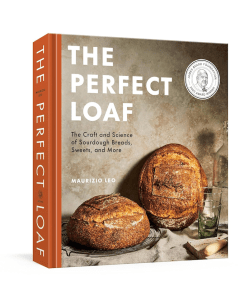 The Perfect Loaf: The Craft and Science of Sourdough Breads, Sweets, and More: A Baking Book
Maurizio Leo’s blog The Perfect Loaf has become one of the most trusted destinations on the internet for anyone learning sourdough baking. With his debut cookbook, he brings that same careful attention to detail, clear instruction, and generous teaching style into a comprehensive guide that walks readers through the essential foundations of sourdough—while also giving them the tools and confidence to go further.
The book begins with the fundamentals: understanding sourdough starters, learning how fermentation shapes flavor and texture, and mastering the techniques that turn simple ingredients into consistently excellent bread. From there, Leo guides readers step by step through a wide range of recipes designed to build both skill and intuition.
The recipes cover many of the breads home bakers love most, including:
Essential freeform loaves: Simple Sourdough, Rosemary & Olive Oil Sourdough, Extra-Sour Sourdough, Cranberry & Walnut, Demi Baguettes
Pan loaves: Everyday Sandwich Bread, Naturally Leavened Brioche, German Whole Rye, Honey Whole Wheat Sandwich Bread
Pizza and flatbread: Roman-Style Pan Pizza, Focaccia, Naan, Flour Tortillas, Pita
Buns and rolls: Soft Dinner Rolls, Potato Buns, Ciabatta Rolls, English Muffins, Bagels
Sweet bakes: Weekend Cinnamon Rolls, Italian Doughnuts, Summer Fruit Sourdough Crostata, Banana Bread, Cinnamon Babka
True to Leo’s teaching philosophy, beginners are supported throughout the entire process. Troubleshooting sections and helpful sidebars address common questions such as how to store a sourdough starter long-term, how to work with baker’s percentages, and how to recognize—and fix—common bread problems.
At the same time, experienced bakers will appreciate the deeper explorations into fermentation science, dough development, and the subtle adjustments that allow bakers to refine their technique. Topics such as hydration, ingredient ratios, freshly milled grains, and specialty flours encourage readers to experiment and gradually develop their own “baker’s intuition.”
Whether you are baking your first loaf or refining your craft, The Perfect Loaf serves as both a practical handbook and an inspiring companion in the kitchen. More information…
