I’ll admit it—I still fall down the YouTube rabbit hole of sourdough advice. Not proudly, not regularly… but often enough to justify calling it “research.” And every now and then, buried between dramatic thumbnails and overly confident narration, there’s a small gem—a detail worth keeping.
Recently, I wandered into the history side of things, and that’s where it gets genuinely interesting. Medieval bakers, working without thermometers, timers, or stainless steel anything, developed methods that still echo in our kitchens today.
Take oven preparation. Back then, you didn’t just turn a knob—you built a fire inside the oven. Once it was hot enough, the coals were removed and the baking surface was cleaned with a wet mop. Practical? Yes. Hygienic? Debatable. But here’s the part we still use: that wet mop created steam. And that steam, whether accidental or intentional, helped develop the crust we all chase today.
Fast forward a few centuries, and we’re using electric ovens with steam injection—not to clean the oven floor, but to achieve that same crust development with far less soot and guesswork.
The same goes for temperature management. A wood-fired oven naturally cools over time. Medieval bakers worked with that curve. Today, we mimic it deliberately—start hot (say 480°F / 250°C), then dial it down after 20 minutes (to around 450°F / 230°C). Different tools, same principle. In many ways, we’re not innovating—we’re reenacting, just with better lighting and fewer splinters.
Now, here’s where things take a turn.
Lately, I’ve come across a wave of videos from channels like Medieval Way and its many lookalikes. And while the historical segments can be engaging, the titles read like they were written during a caffeine-fueled apocalypse:
“Why Medieval Bread Was A Superfood While Your Modern Bread Makes You Sick”
“7 Medieval Sourdough Methods That Modern Baking Erased”
“Modern Flour is Slowly Ruining Us”
You can almost hear the ominous music.
To be fair, these titles are doing exactly what they’re designed to do—get clicks. And yes, some of the historical insights are worth your time. But once the narrative shifts from “this is how people baked” to “this is why you’re being poisoned,” things start to wobble.
Take the potash argument, for example. One video spends a good half hour building up potash as some kind of lost miracle ingredient—the secret behind superior medieval bread. The implication? We replaced it with yeast, and now everything is worse.
That’s… generous storytelling.
Potash (essentially an alkaline substance derived from wood ash) was used because it was available, not because it was nutritionally superior. It can affect dough behavior, yes—but calling it healthier is a stretch. A long one. More like a leap across centuries without looking down.
In reality, medieval bakers worked with what they had: variable flour quality, unpredictable fermentation, and ovens that behaved more like moods than machines. Their methods were clever adaptations, not optimized systems. We, on the other hand, have consistency, control, and a much better understanding of fermentation.
See also my post Potash and the Peculiar History of Making Bread Rise Before Anyone Knew Why
So no, modern bread isn’t secretly plotting against you. And no, medieval bread wasn’t a magical cure-all baked in a stone oven under candlelight.
But there is something worth appreciating: many of the techniques we use today—steam, temperature control, long fermentation—have roots in those earlier practices. Not because everything was better back then, but because some ideas were simply sound and survived the centuries.
And that’s where the real value lies—not in the headlines, but in the details they occasionally forget to exaggerate.
So, let’s take a closer look at what’s actually true, what’s misunderstood, and what belongs firmly in the “great story, questionable conclusion” category.
Why Medieval Bread Was A Superfood While Your Modern Bread Makes You Sick
Let me loosely quote the argument making the rounds:
“Today, bread inflames your gut, spikes your blood sugar, and leaves you hungry an hour later. In medieval times, there was no diabetes epidemic, no gluten sensitivity crisis, no inflammatory bowel disease. Now, one in three adults is pre-diabetic. Celiac disease has increased by 400% since the 1950s. Millions suffer from ‘non-celiac gluten sensitivity’—bloating, brain fog, joint pain, chronic fatigue. Back then, bread made up 70% of the diet. Today, we’ve moved away from that—and now everyone is sick.”
It’s a compelling story. It’s also a bit too convenient.
Yes, modern health issues like diabetes and digestive disorders are real and worth serious attention. And yes, nutrition matters—probably more than we’d like to admit when we’re reaching for that third slice. But drawing a straight line from “modern bread” to “modern illness” is a stretch that would make even the most ambitious sourdough starter collapse.
For one, medieval life came with a few… side effects that tend to get left out of these narratives. Life expectancy was shorter, medical knowledge was limited, and many conditions simply weren’t diagnosed, recorded, or even understood. The absence of evidence is not evidence of absence—it’s often just the absence of record-keeping.
Then there’s the broader picture. Today’s health landscape is shaped by far more than bread: overall diet, sugar consumption, ultra-processed foods, sedentary lifestyles, stress, sleep habits—you name it. Bread didn’t suddenly decide to go rogue sometime in the 20th century.
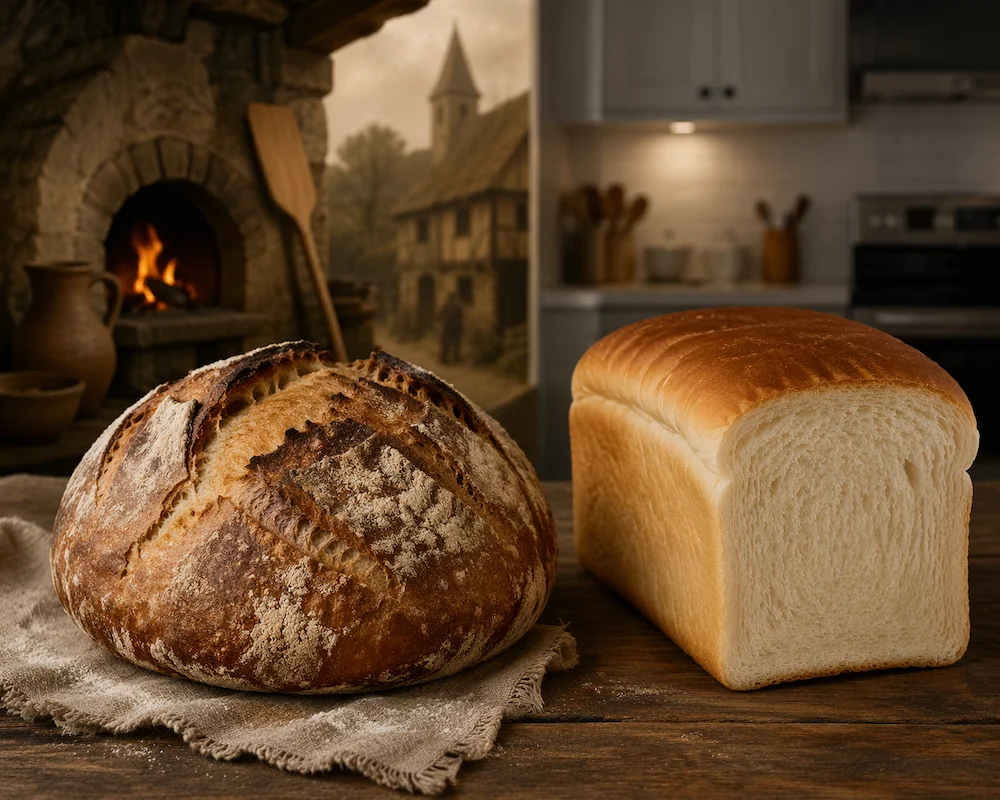
And even the bread itself? It’s not one thing. There’s a world of difference between a slow-fermented sourdough and a highly processed, shelf-stable loaf engineered for convenience. Lumping them together under “modern bread” is like comparing a handmade violin to a plastic kazoo and blaming “music” for the noise.
So yes, let’s take nutrition seriously. Let’s question ingredients, methods, and habits. But blaming our collective health issues on “bad bread” alone oversimplifies a much more complex reality.
In other words—it’s time for a proper reality check.
The Great Bread Myth: Why the Past Isn’t as Healthy as It Sounds
The claims that were made sound persuasive because they mix a few real trends with a lot of oversimplification. Let’s take it apart piece by piece and see what actually holds up.
First, “bread inflames your gut, spikes your blood sugar, and leaves you hungry.”
That can be true—but only for certain types of bread. Highly refined, fast-fermented, low-fiber loaves (the typical industrial sandwich bread) are digested quickly, which can lead to rapid blood sugar spikes and short-lived satiety. On the other hand, slow-fermented sourdough, whole grain breads, and high-fiber loaves behave very differently. They digest more slowly, often have a lower glycemic response, and tend to keep you full longer. So the issue here isn’t “bread,” it’s which bread.
Second, “there was no diabetes, gluten sensitivity, or inflammatory bowel disease in medieval times.”
This is where the argument starts to fall apart. It’s not that these conditions didn’t exist—they were simply not diagnosed or documented in any meaningful way. Medieval medicine had no concept of blood glucose, autoimmune disorders, or microbiome-related diseases. People suffered from chronic digestive issues, fatigue, and malnutrition, but those symptoms were rarely categorized, recorded, or understood.
Also worth noting: average life expectancy was much lower. Many chronic diseases, including type 2 diabetes, are strongly age-related. If fewer people lived into older age, fewer people would show long-term metabolic disease in the first place.
Third, “one in three adults is pre-diabetic.”
That statistic is broadly accurate in modern Western populations. But attributing it to bread alone ignores the bigger drivers: high sugar intake, ultra-processed foods, sedentary lifestyle, and overall caloric excess. If anything, bread is just one contributor in a much larger dietary pattern—not the central villain.
Fourth, “celiac disease has increased by 400% since the 1950s.”
There is evidence that diagnosed celiac disease has increased significantly. But again, several factors are at play:
- Improved diagnostics (we can now detect what was previously missed)
- Greater awareness among physicians and patients
- Possible environmental factors (hygiene hypothesis, microbiome changes, antibiotic use)
It’s still debated how much of the increase is real versus better detection. Either way, blaming “modern bread” alone is not supported by the evidence.
Fifth, “non-celiac gluten sensitivity” and symptoms like bloating, brain fog, and fatigue.
These symptoms are real, but the causes are often broader than gluten itself. In many cases, people react to:
- FODMAPs (fermentable carbohydrates found in wheat and other foods)
- Food additives and processing methods
- Overall dietary patterns
Interestingly, long sourdough fermentation can reduce some of these compounds, which is why some people tolerate sourdough better than standard bread. Again, this points to processing and fermentation—not simply “old vs modern.”
Sixth, “bread made up 70% of the diet in medieval times, and now everyone is sick.”
Even if we accept that bread was a major calorie source, that doesn’t mean it was nutritionally ideal. Medieval diets were often monotonous and lacking in key nutrients. Bread was a necessity, not a superfood. It provided calories—sometimes barely enough.
More importantly, modern illness correlates far more strongly with:
- Increased consumption of refined sugars and ultra-processed foods
- Reduced physical activity
- Higher caloric intake overall
- Changes in lifestyle and environment
Bread consumption, in many regions, has actually decreased over time while metabolic diseases have increased. That alone weakens the argument.
So what’s the reality?
The claim works because it tells a clean story: “Then good, now bad.” But real nutrition and health don’t work that way. Medieval bread wasn’t magical, and modern bread isn’t inherently harmful. The difference lies in ingredients, processing, fermentation, and overall diet.
If anything, the takeaway is this: traditional methods like long fermentation and whole grains can improve bread—but they’re part of a broader picture, not a cure for modern health problems.
In short, the argument isn’t entirely wrong—it’s just pointed at the wrong target.
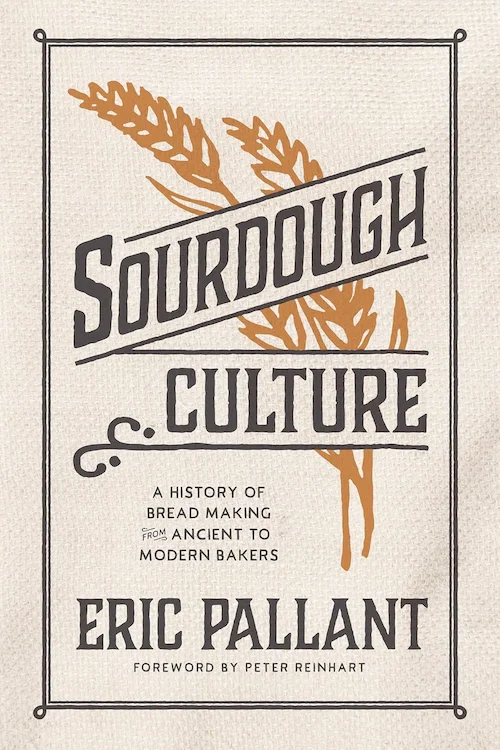 Sourdough Culture: A History of Bread Making from Ancient to Modern Bakers
The essential story of bread baking—and how sourdough became a global phenomenon.
Sourdough bread fueled the labor that built the Egyptian pyramids. The Roman Empire distributed free loaves to maintain social stability. More recently, during the COVID-19 pandemic, sourdough baking surged worldwide as people, confined to their homes, searched for comfort, purpose, and a sense of control amid uncertainty. In Sourdough Culture, environmental science professor Eric Pallant reveals that, across centuries, sourdough has never been just about bread—it has always been about survival.
Sourdough Culture traces the history and basic science of sourdough baking from its discovery more than six thousand years ago to its gradual displacement by industrial dough mixers and commercial yeast. Pallant follows its journey across continents, from the Fertile Crescent through Europe and eventually around the world. Along the way, he connects sourdough to some of history’s most recognizable figures—Plato, Pliny the Elder, Louis Pasteur, Marie Antoinette, Martin Luther, and Antonie van Leeuwenhoek—while also honoring the countless unnamed bakers who depended on it: Roman professionals, medieval households, Gold Rush miners, and generations of ordinary people who baked bread daily without recognition.
Each chapter is paired with recipes drawn from Pallant’s own collection, spanning cultures and centuries. These recipes reflect the diversity of sourdough traditions while offering practical insight into the craft itself. The result is a book that is both informative and engaging—particularly for bakers of all levels—but, more importantly, one that tells the enduring story of the bread that has quietly sustained the world. More information…
