
Few foods have been elevated to modern health-cult status quite like sourdough bread. To hear parts of the internet tell it, sourdough is not merely bread—it is a fermented superfood, a digestive aid, a nutritional upgrade, and perhaps one laboratory test away from being classified as medicine.
Reality, as usual, is less dramatic.
Sourdough does offer legitimate nutritional advantages over conventional fast-risen bread. But many of those advantages are routinely overstated, misunderstood, or stripped of context—particularly when people begin discussing starch, carbohydrates, and the idea that sourdough somehow “eliminates” the unhealthy parts of bread.
It does not.
Still, when made thoughtfully, sourdough can be a more nutritious and digestible bread than many commercial alternatives. The key is understanding where the real benefits come from—and where the hype begins.
First: What Is Bread Mostly Made Of?
Bread, including sourdough, is primarily composed of carbohydrates in the form of starch.
That fact alone causes concern for some people.
“Too much starch” has become a frequent criticism of bread in general, often tied to worries about:
- Blood sugar spikes
- Weight gain
- Processed carbohydrates
- Insulin response
- “Empty calories”
And yes—bread is indeed a starch-heavy food. There is no way around that.
Whether your loaf is:
- Commercial sandwich bread
- Artisan sourdough
- Rustic country boule
- A loaf baked by monks in a stone oven at sunrise while chanting ancient prayers
…it is still fundamentally a starch-based food.
Sourdough fermentation does not remove that reality.
Does Sourdough Reduce Starch?
Not in any dramatic way.
During fermentation, the sourdough culture consumes a portion of the available sugars and some byproducts of starch breakdown. However, the vast majority of the starch remains in the dough.
So if someone believes sourdough somehow becomes “low starch” or “low carb” because of fermentation, that is simply incorrect.
The starch content remains substantial.
Then Why Do People Claim Sourdough Is Better?
Because while sourdough does not remove the starch, fermentation can change how the body processes it.
Sourdough May Produce a Lower Glycemic Response
Studies suggest that sourdough bread often causes a somewhat lower blood sugar spike than comparable yeast bread.
This is generally attributed to:
- Organic acids produced during fermentation
- Slower gastric emptying
- Altered starch digestibility
- Structural changes in the crumb matrix
In practical terms:
Your body may digest sourdough starch somewhat more slowly.
That does not make sourdough a low-carb food.
It simply means the starch may hit your bloodstream a little less aggressively than in rapidly fermented bread.
Think of it as “somewhat improved carbohydrate behavior,” not “carbohydrates magically removed.”
If You Are Concerned About Starch…
Then flour choice matters at least as much—if not more—than fermentation.
A fluffy white sourdough loaf made from refined bread flour may be delicious, but from a carbohydrate perspective it remains a relatively starch-dense food with limited fiber.
A denser whole grain loaf behaves differently because the fiber, bran, and intact grain components slow digestion and improve satiety.
Which brings us to the most overlooked truth in sourdough nutrition discussions:
Flour Choice Matters More Than Fermentation
Fermentation helps.
Flour determines the baseline.
If you make sourdough from refined white flour, you are still making refined white bread—just better fermented.
That is not a criticism. White sourdough can be wonderful.
But nutritionally, fermentation alone does not transform it into something radically different.
White Flour / All-Purpose / Bread Flour
Refined white flour has had the bran and germ removed.
That means:
- Lower fiber
- Reduced vitamins
- Reduced minerals
- Less fat
- Higher proportion of digestible starch
- Milder flavor and better gluten performance
White sourdough made from these flours:
- May digest better than standard white bread
- May produce a somewhat gentler glycemic response
- May improve mineral absorption modestly
But it is still fundamentally refined bread.
Whole Wheat Flour
Whole wheat retains the full grain:
- Bran
- Germ
- Endosperm
That gives it:
- More fiber
- More B vitamins
- More minerals
- Greater satiety
- Better nutritional density
It also changes baking behavior:
- Faster fermentation
- Heavier crumb
- Reduced oven spring
- More demanding dough handling
In exchange, you get bread that is objectively more nutrient-dense.
Rye Flour
Rye deserves special mention because it behaves and nourishes differently.
Rye offers:
- High fiber content
- Unique starch composition
- Distinct micronutrients
- Strong satiety effects
- Often lower glycemic response than white wheat breads
Rye also tends to produce denser loaves and requires a different handling approach because it contributes less gluten structure.
But nutritionally, rye can be an excellent addition.
Sourdough’s Real Nutritional Advantages
Where sourdough genuinely helps:
Better Mineral Availability
Grains contain phytic acid, which can bind minerals and reduce absorption.
Sourdough fermentation helps break down some of that phytic acid, potentially improving the bioavailability of:
- Iron
- Zinc
- Magnesium
- Calcium
Improved Digestibility
Many bakers and eaters report that sourdough feels gentler on digestion.
Likely reasons include:
- Partial breakdown of proteins
- Breakdown of some fermentable carbohydrates
- General pre-digestion of dough during long fermentation
Better Satiety and Eating Experience
While not a laboratory metric, sourdough’s richer flavor and texture often encourage slower eating and greater satisfaction compared to bland commercial bread.
That alone can influence portion control more than people admit.
What Sourdough Does Not Do
To keep expectations realistic, sourdough does not:
- Eliminate gluten
- Remove most starch
- Become low-carb
- Turn white flour into whole grain
- Automatically become “healthy” regardless of ingredients
My Practical View
If you love baking white sourdough, enjoy it.
There is nothing wrong with that.
But if your goal is maximizing nutrition rather than merely improving digestibility and flavor, the better strategy is:
- Use sourdough fermentation
- Incorporate more whole grains
- Reduce reliance on 100% refined flour
A loaf made with:
- 70–85% bread flour
- 10–20% whole wheat
- 5–15% rye
often strikes an excellent balance between:
- Strong oven spring
- Open crumb
- Pleasant handling
- Improved nutritional profile
Final Thoughts
Sourdough bread is healthier than many people think—but not for the exaggerated reasons often repeated online.
It is not healthy because fermentation “removes the carbs.”
It does not.
It is not healthy because it “eliminates starch.”
It does not.
It can be healthier because:
- Fermentation improves digestibility
- Fermentation may lower glycemic response somewhat
- Fermentation improves mineral availability
- Whole grain inclusion can significantly raise nutrient density
The real lesson is simple:
Sourdough improves bread.
Whole grains improve nutrition.
Combining both is where the real magic happens.
In short:
If you want the most nutritious loaf possible, do not rely on fermentation alone.
Use better flour.
And if anyone tells you their 100% white-flour sourdough boule is basically a health supplement because it fermented for 18 hours, smile politely and back away slowly.
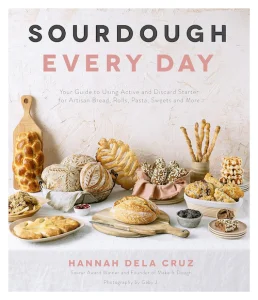
Take your sourdough baking beyond the basics with Hannah Dela Cruz’s inventive and highly practical collection of recipes. From rustic loaves and soft sandwich breads to flatbreads, crackers, pasta, breakfast staples, and desserts, this book shows how to make the most of both your active starter and your discard.
A self-taught baker, Hannah has a way of making sourdough approachable without oversimplifying it. She walks you through the entire process—from creating and maintaining a starter to baking your first successful loaf—then gradually expands into a wide range of recipes that build confidence and skill without feeling overwhelming.
Her recipes strike a balance between classic and creative. You’ll find familiar breads like a Whole Wheat Country Loaf alongside more adventurous options such as Mexican Hot Chocolate Rye or Semolina Chili-Cheddar Loaf. There’s also a strong focus on breads that fit into everyday life—Honey Butter Rolls for sandwiches, or enriched and filled breads like Sweet Potato–Cardamom Buns, Garlic Butter Couronne, and Cherry-Chocolate Babka.
Where the book truly stands out is in its approach to discard. Instead of treating it as a byproduct, Hannah turns it into an opportunity. Her discard recipes cover everything from breakfast and snacks to pasta, dumplings, cakes, cookies, and desserts—each one making practical use of what would otherwise be thrown away, while adding that subtle sourdough depth of flavor.
Whether you’re just starting out or already comfortable with sourdough, this is the kind of book that keeps you baking—not because you have to, but because you’ll want to try what’s next. More information…
